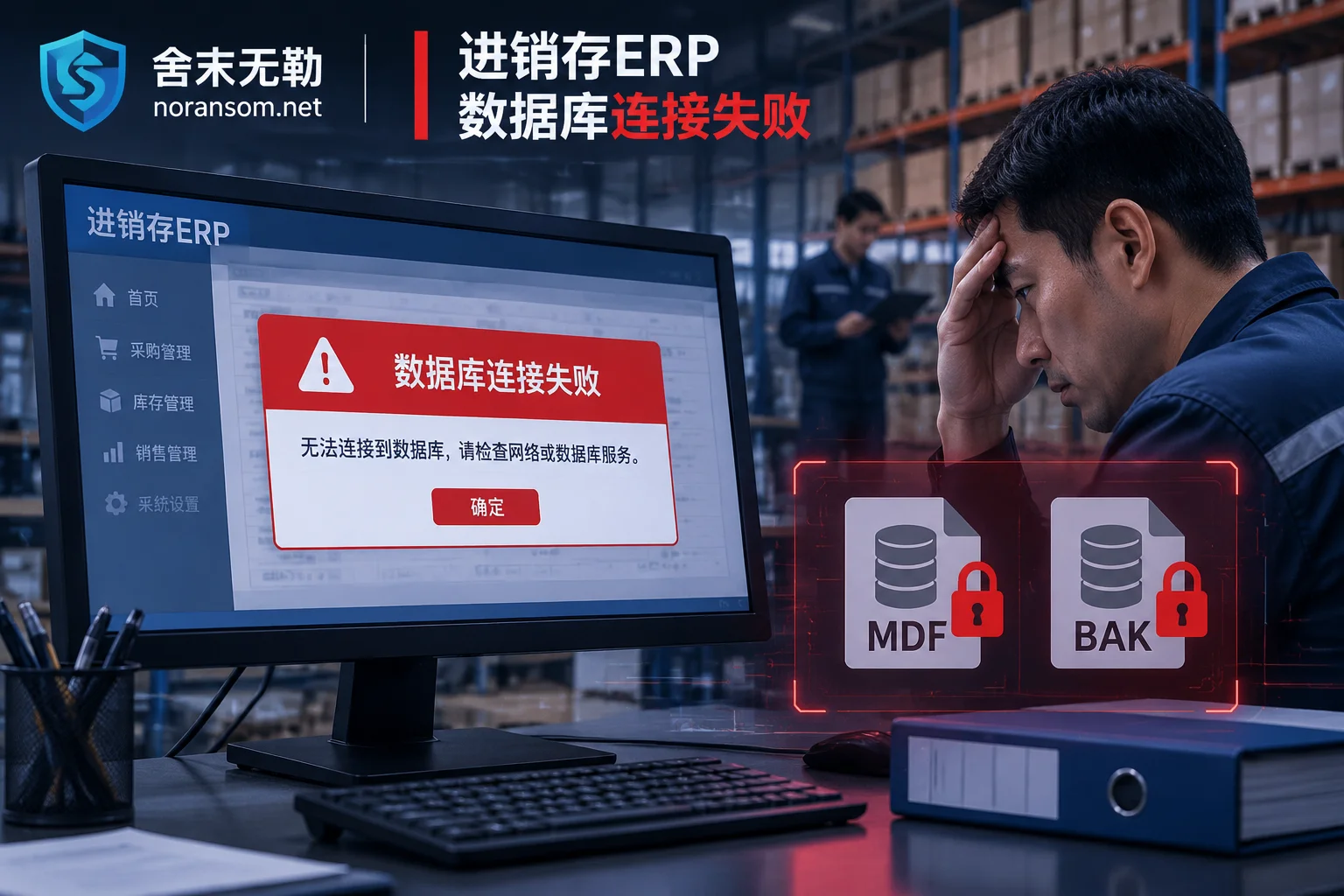
Ransomware: On-Site vs. Remote Response — How to Choose
Most ransomware incidents start with remote assessment; on-site response is required for physical media, very large data volumes, hardware faults, or forensic preservation.
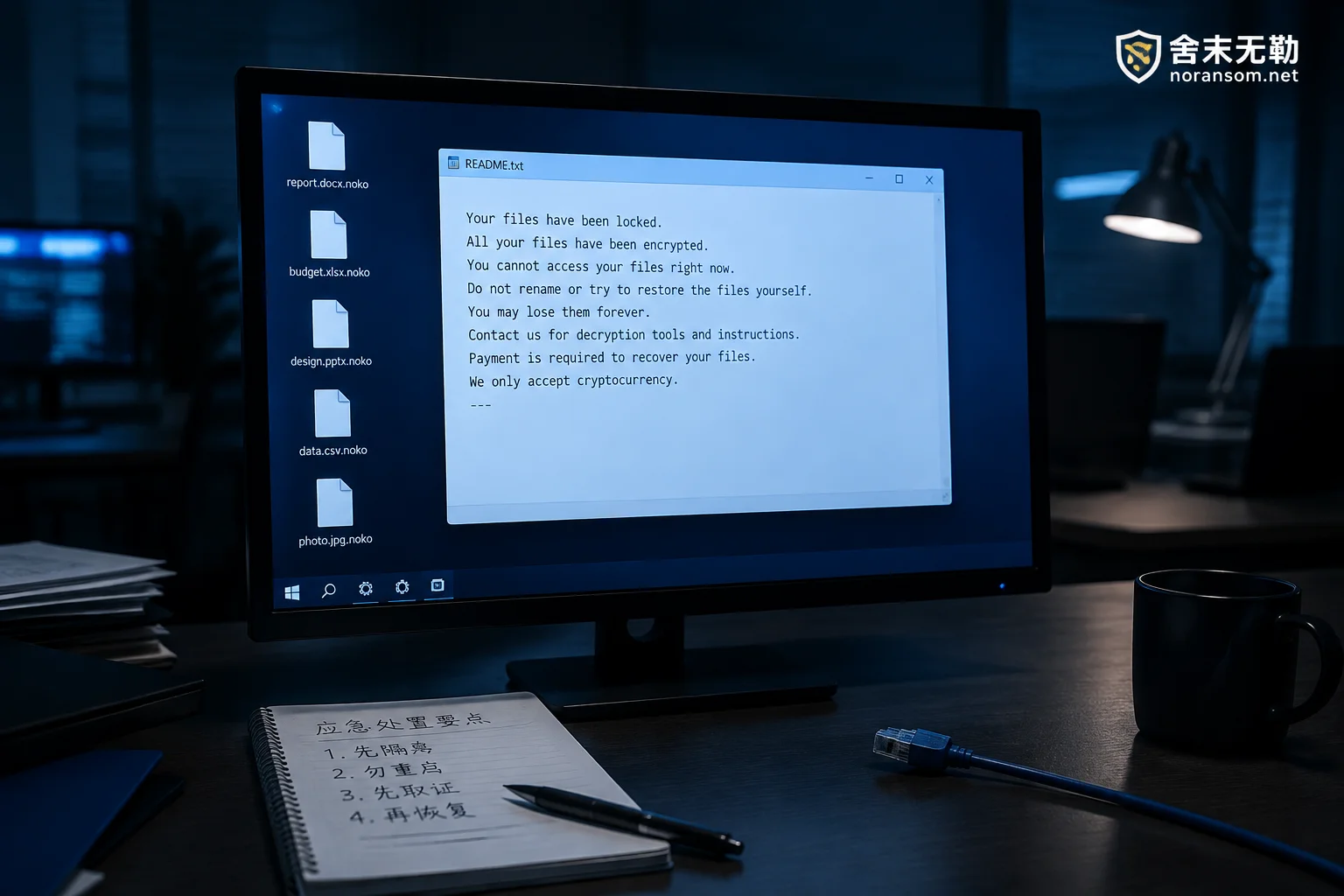
Only a Ransom Note Left: How to Determine If Encrypted Files Can Be Decrypted
Even if the malware has self-deleted and only a ransom note remains, you can still make a reasonable assessment. This article explains the five types of clues in a ransom note to identify the family, how to check public platforms for free decryption tools, why finding a tool doesn't guarantee your files can be decrypted, and what evidence to gather if no conclusion is reached, plus remaining recovery paths that don't rely on decryption.

Server Encrypted by Ransomware with No Backup: Stop the Bleeding First, Then Assess Remaining Recovery Paths
When a server is encrypted and no usable backup exists, the priority is not finding a decryption tool but isolating, checking whether encryption is ongoing, and preserving original encrypted files. This article gives the action order for the first few hours, how to inventory overlooked residual copies, and the conditions for three non-ransom paths: public decryptors, key implementation flaws, and database fragment extraction.
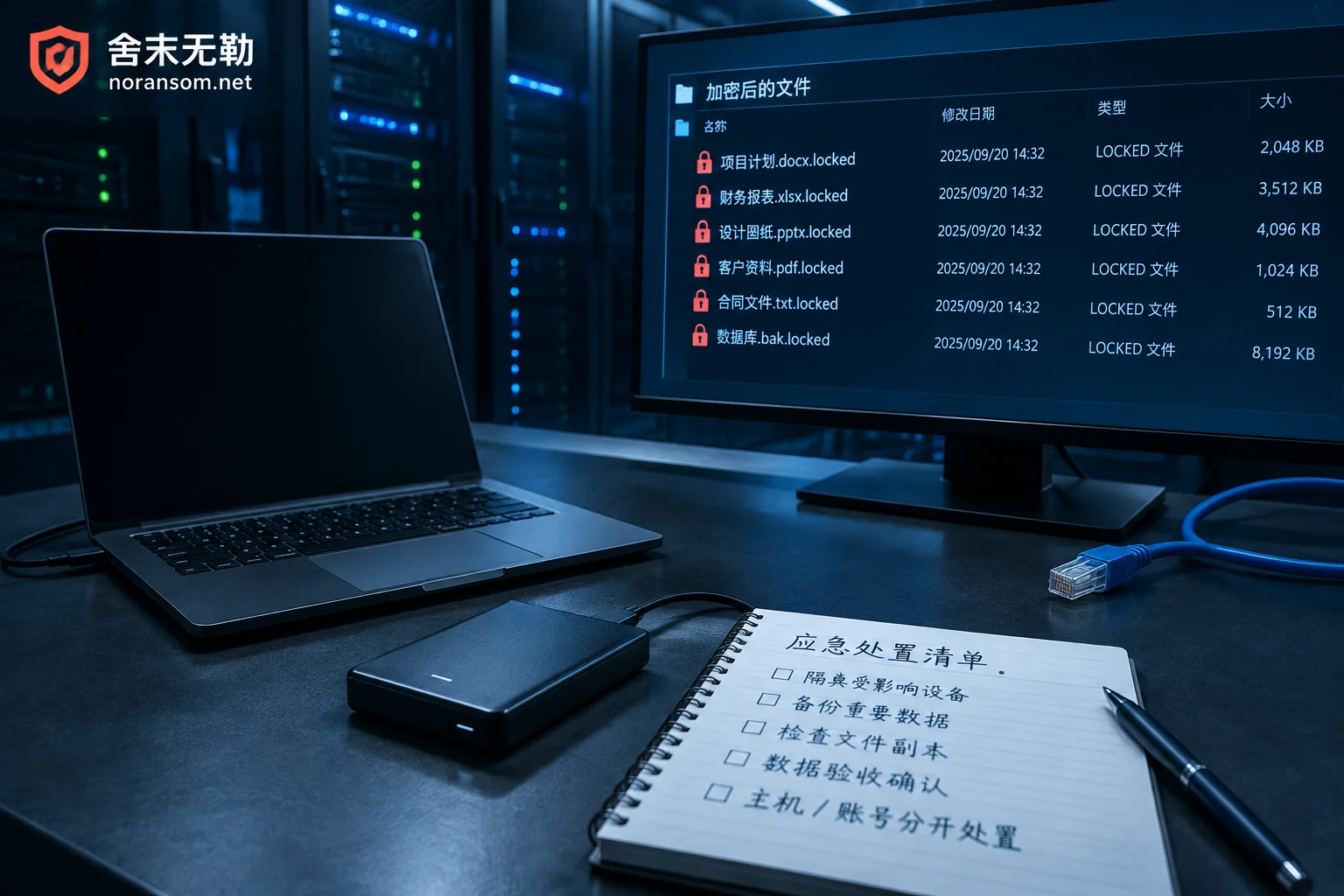
What to Prepare Before Remote Ransomware Emergency Response: 6 Preparations Before Access
During the wait for remote technical support after files are encrypted, making the right preparations can determine how much can still be recovered. This article explains by priority how to define the isolation scope, how to decide whether to shut down, which ransom notes and samples must be preserved as-is, why backups must be disconnected first, how to set up a clean jump host and remote channel, and what account and fund handling materials to prepare when a remote access trojan is also involved.
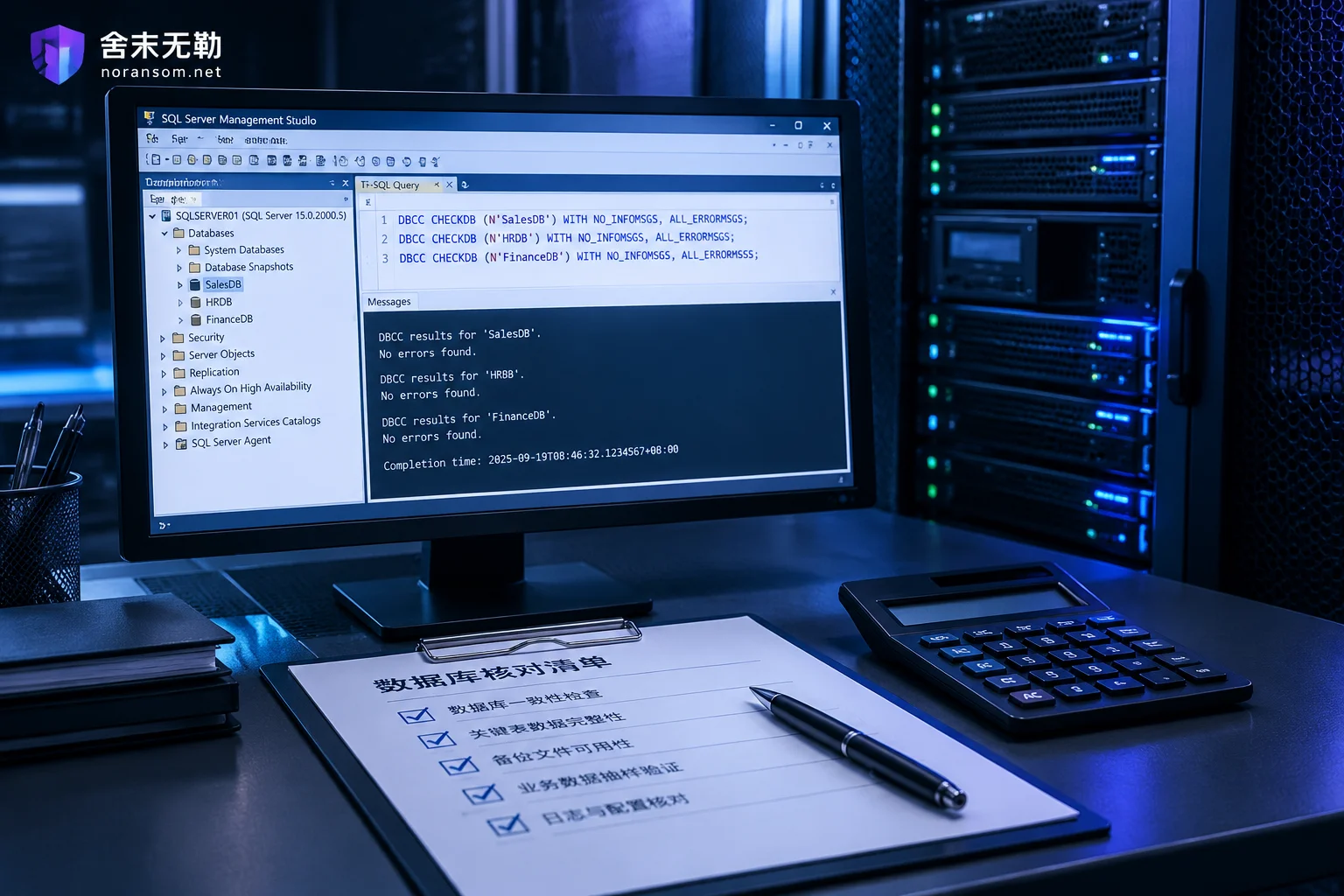
Is Your SQL Server Ready After Recovery? Five-Step Verification from CHECKDB to Financial Reconciliation
A successful database attach and service start do not guarantee complete and usable business data. This article outlines a five-step verification sequence after ransomware or severe failure: first perform engine-level consistency checks on a copy, then examine constraints and orphan records, logins and permissions, recovery point-in-time, and finally have business and finance staff reconcile and test in an isolated environment before going live.