
How to Recover from Ransomware-Encrypted Virtual Machines: First Determine Whether the Guest OS or the Hypervisor Host Is Compromised—The Recovery Pat
When business virtual machines become unreachable or file errors occur, blindly rebooting the host or rebuilding snapshots often completely destroys the remaining data structures. This article,结合 recent trends in virtualization escapes and underlying encryption, teaches you how to quickly determine the actual layer at which a virtual machine is encrypted by ransomware, and provides a complete emergency path from freezing the scene and identifying the family to recovering internal databases and ERP account sets.

How to Recover a SQL Server Database Encrypted by Ransomware: Don't Force-Attach MDF, Evaluate Recovery Chances in Three Steps
When a SQL Server database (MDF, NDF, BAK) is encrypted by ransomware, blindly running DBCC CHECKDB or forcing attachment can cause further damage. This article explains emergency actions, page-level recovery principles, and how to assess ransomware data recovery feasibility without paying the ransom.

What to Prepare Before Contacting a Ransomware Recovery Company
Ransomware recovery cannot be priced from a single statement that files were encrypted. This article explains the five types of materials usually needed before assessment and quotation: the original ransom note, a few small non-sensitive encrypted samples with unencrypted counterparts, the affected asset and database environment, backup and snapshot status, actions already taken after the incident, and how to sample without causing secondary damage or leaking sensitive data.

ESXi VM Encrypted with No Snapshot: Don't Touch the Original Storage—Assess What's Recoverable in This Order
When an ESXi VM is encrypted by ransomware with no snapshot or usable backup, first stop all writes to the datastore, then determine whether the VM config files or the underlying -flat.vmdk data disks are damaged.
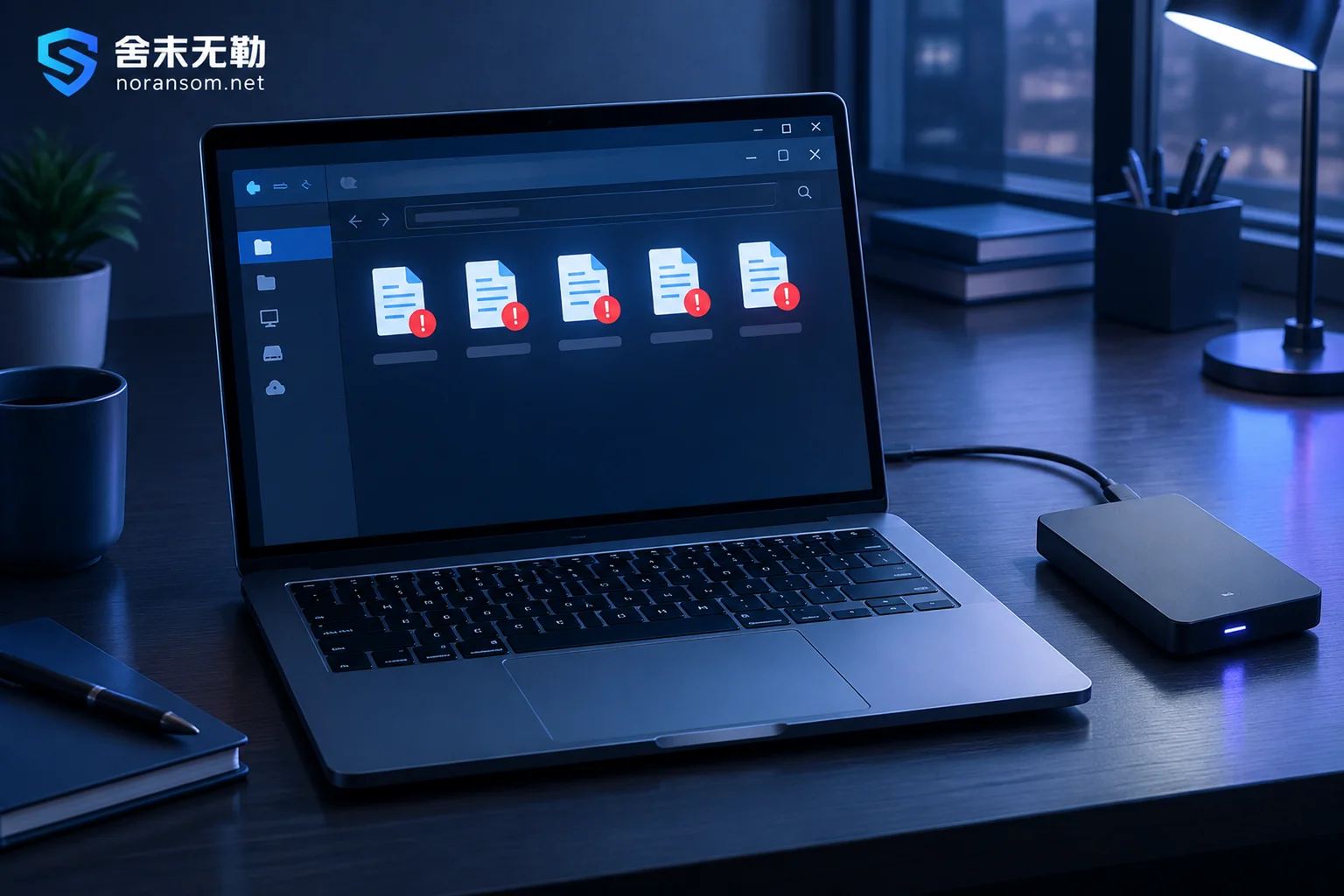
Ransomware Decryption Files Won't Open: Determine If They're Undecrypted or Corrupted
When decrypted files won't open, it's often not a simple 'decryption failure.' This article outlines the first forensic steps after stopping, teaches you to use file headers to determine if files were truly restored, and explains what to do in cases of tool mismatch, decryptor flaws, interrupted encryption, multiple encryption, and database corruption.