As cyberattack methods evolve, ransomware protection is no longer a simple problem that can be solved by installing antivirus software. Recently, industry news has frequently exposed targeted attacks on critical infrastructure and enterprise ERP systems. Many enterprises only realize after being attacked that not only business operations halt, but even backup data is not spared.
Why is 'prevention' alone often insufficient?
Current ransomware attacks often involve long-term latency, lateral movement, and targeted encryption. Particularly, 'SilverFox' remote-control Trojans not only steal data but also bypass traditional defenses through precise poisoning. When an attack occurs, if enterprises focus only on 'antivirus', they often fail to thoroughly clean resident backdoors, leading to systems being re-encrypted shortly after recovery. True ransomware protection should be a full lifecycle management covering 'emergency response, handling, recovery, and hardening'.
Building a 'closed-loop' mindset for ransomware protection
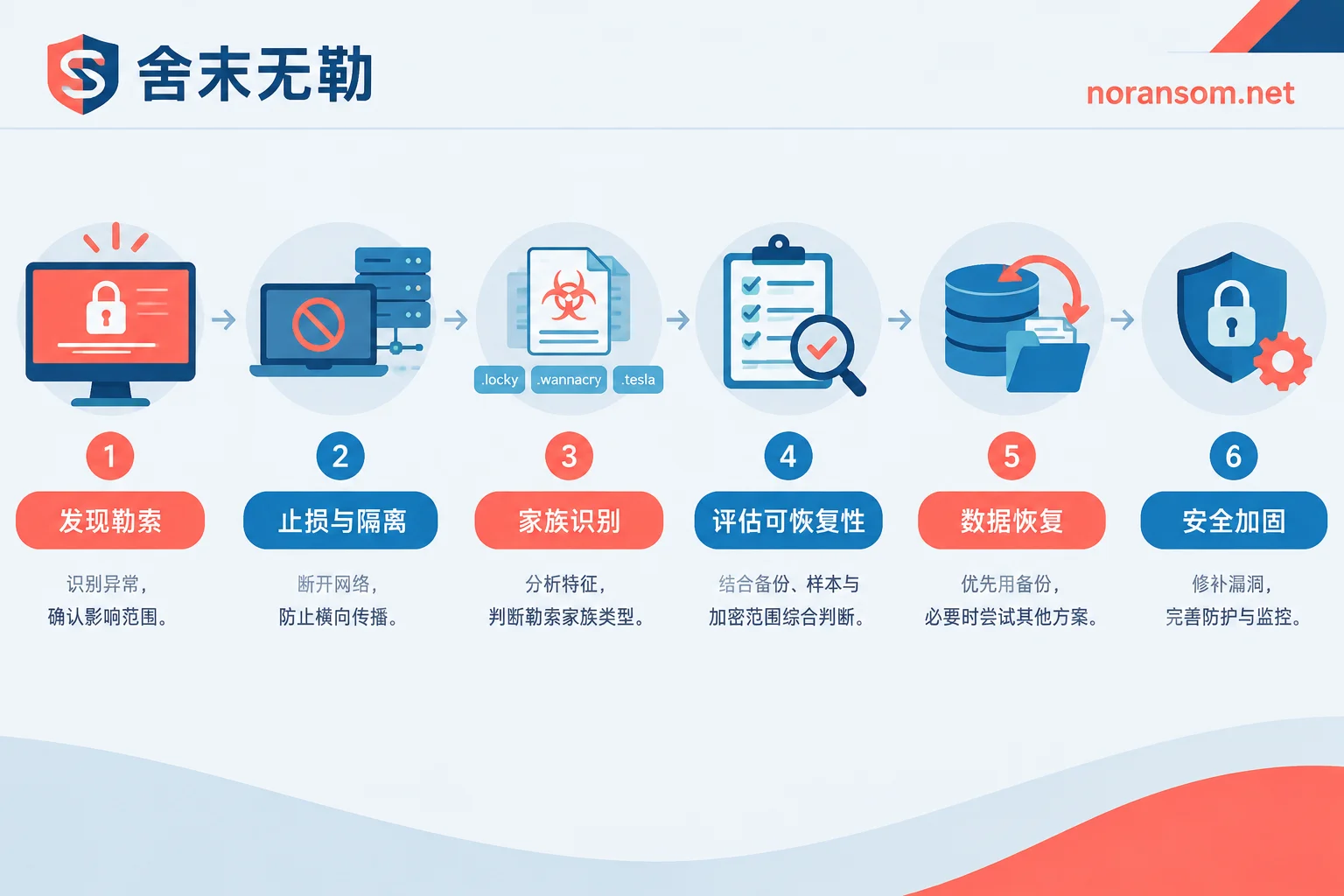
When facing sudden threats, enterprises need to establish a clear handling logic rather than blindly trying decryption tools or reinstalling systems:
- Scientific identification, avoid blind trial and error
Don't be misled by fancy file extensions. Before handling, use the ransomware identification tool to lock down the virus family, so you can determine whether a usable decryption solution exists or if you need to switch to data extraction and underlying repair processes. - Prioritize, respond in an orderly manner
When multiple hosts are damaged, the worst approach is to 'try to handle everything at once'. Prioritize protection and emergency response for core business systems. After completely stopping the damage, then consider subsequent recovery work.
- 'Differentiated' paths for data recovery
For encrypted databases or virtual machines, data recovery services are more effective than simple decryption. Whether it's file-level repair of SQL Server database files or file extraction from ESXi virtualization platforms, professional analysis can often retrieve critical business data from fragments. - Eradicate the root cause, thoroughly harden
Recovering data is just the beginning; preventing re-infection is key. The core of security hardening protection lies in reducing exposure surface and patching permission vulnerabilities. If your ERP system (such as UFIDA, Kingdee, Chanjet) encounters ransomware, targeted hardening strategies are needed rather than simple system reinstallation.
Conclusion
The highest level of ransomware protection is 'not only to defend, but also to recover'. Don't wait until hackers knock on the door to look for solutions. Understanding various ransomware database characteristics and typical scenario response plans in advance is a necessary defense line for every IT manager.
If you are currently facing an emergency with business operations halted, please stay calm and follow the scientific handling process. Do not rush to seek help indiscriminately.



Comments(0)