Ransomware Decryption Is Not a 'Master Key': How Enterprises Can Scientifically Evaluate Data Rescue Paths
In the cybersecurity landscape of 2026, ransomware attacks are no longer a simple 'encrypt-and-extort' process. For high-frequency active families such as Weaxor, Mallox, and Phobos, attackers often accompany their attacks with backup destruction, remote control persistence, and lateral movement.
When critical business operations are suddenly interrupted, enterprise management and IT teams are most likely to fall into 'panic-driven decisions': blindly trying various 'decryption software' online, or performing ineffective data overwrite operations before understanding the situation. These actions are often the 'fatal push' that makes data completely unrecoverable.
1. Step One: Stop Blindness, Identify the Family First
After files are encrypted, many people's first reaction is to look for a 'one-click decryption tool.' But the reality is that most ransomware families have different variant versions; even with the same file extension, the encryption mechanism and recoverability can vary greatly.
The first principle that Shemowule adheres to is: Don't touch blindly, identify first. You can use the free online ransomware identification tool to enter the encrypted file extension or ransom note filename and quickly match family characteristics. Combined with the ransomware extension lookup table, you can preliminarily determine the attack type.
2. Step Two: Rational Assessment, Reject 'Unrealistic Promises'
The core of true ransomware emergency response is not 'decryption' but 'assessment.' In the Shemowule service system, we do not talk about so-called '100%,' but instead issue a rigorous recoverability assessment report based on sample analysis.
We need to clarify:
- Recoverable scope: To what extent has the data been overwritten?
- Optional paths: Is recovery through password cracking, vulnerability exploitation, or fragment extraction from unencrypted remnants?
- Risk and effect: Assessment of expected recovery time and completeness.
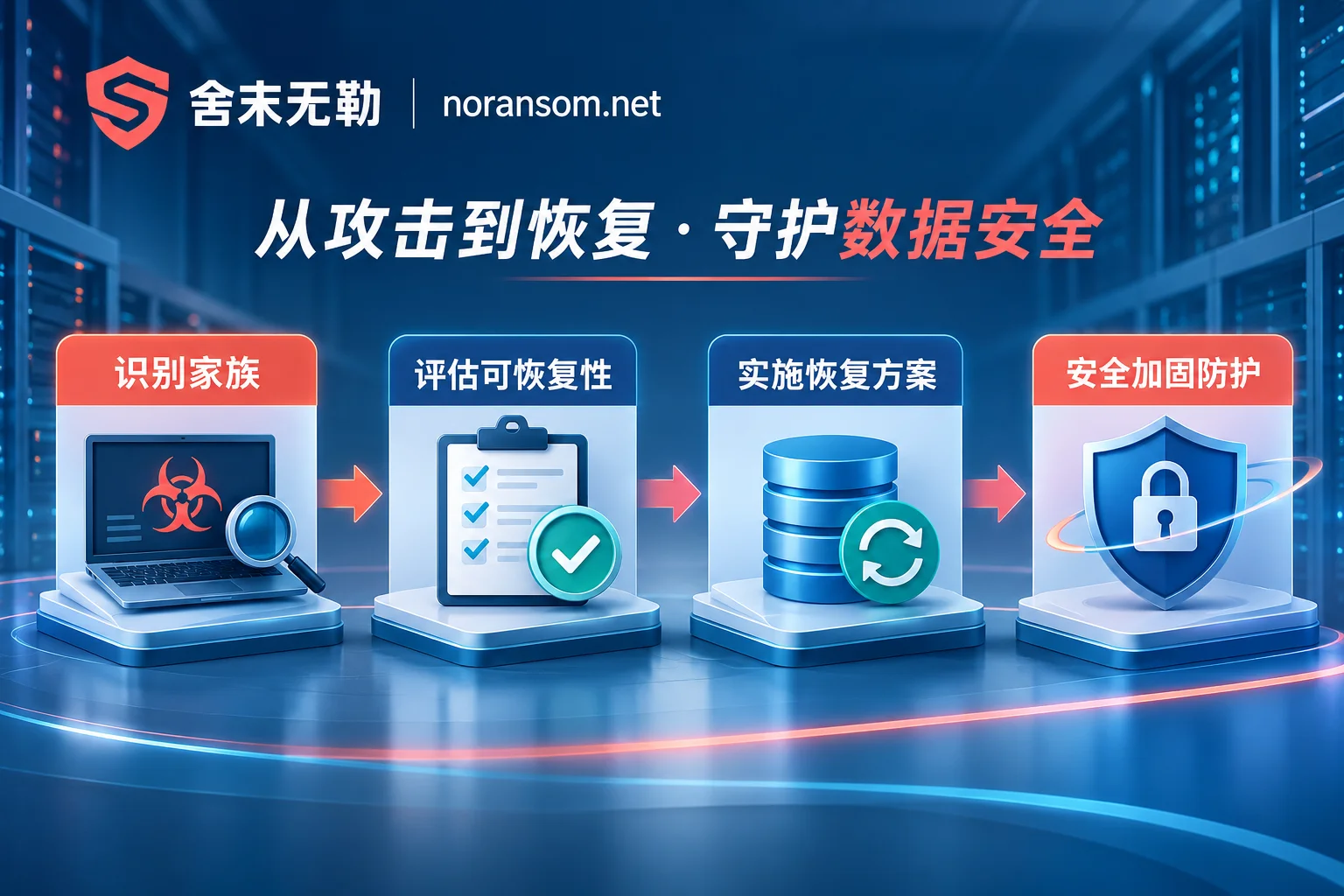
3. Step Three: Systematic Rescue by Scenario
Ransomware attacks different business systems with different logics, so targeted recovery paths are crucial. For common encryption scenarios, we have mature specialized technical reserves:
- Database special: For example, SQL Server encrypted, requires deep-level data page repair.
- Virtualization platform: For example, ESXi/Hyper-V virtual machines locked, the focus is on rescuing virtual disk header damage.
- ERP system: Facing Yonyou, Kingdee, Guanjiapo and other ERP systems paralyzed, we not only focus on database repair but also on verifying the integrity of business account sets.
4. Protection Upgrade: From Emergency to 'Resilience'
After data recovery, the emergency process is not over. If SilverFox Trojan and remote control are not cleaned up when removing the virus, or if security hardening protection is not performed in time, enterprises may encounter secondary ransomware in a short period.
We advocate a scientific full process of 'stop loss first, then forensics, then recovery,' ensuring that while restoring business, we reduce external exposure, remediate vulnerabilities, and rebuild an undeletable backup architecture.
Decision Guide:
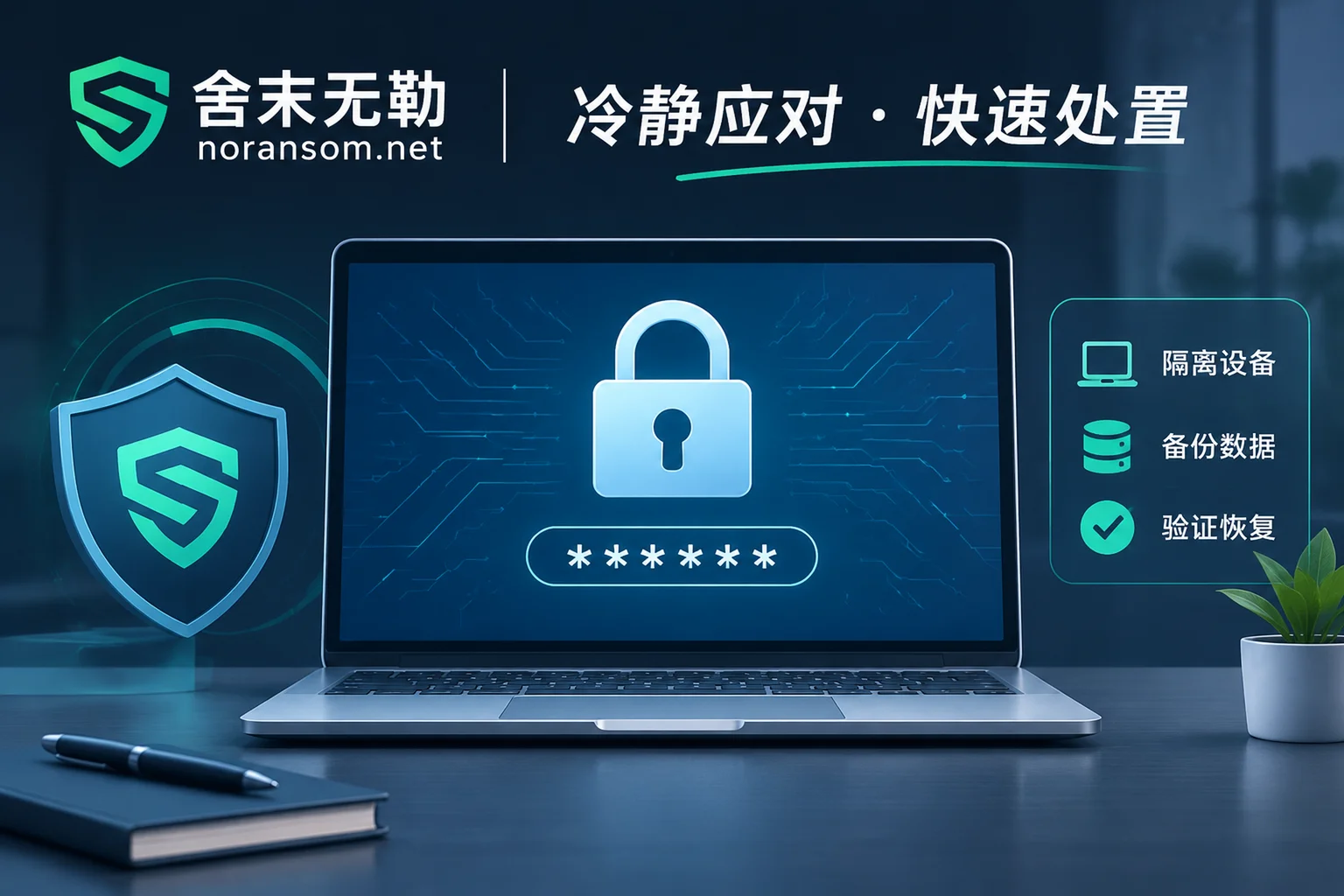
If you are suffering from a ransomware attack, stay calm and refer to the detailed emergency response process for operations. Through rational identification and professional assessment, losses can often be minimized.



Comments(0)