When an enterprise server is encrypted by ransomware, the string of glaring garbled characters on the screen often instantly triggers "panic operations" among decision-makers. However, in many cases handled by Noransom, we have found that: compared to the encryption capabilities of the virus itself, the "secondary damage" caused by wrong decisions is often the root cause of complete data loss.
1. Beware: Your Emergency Decisions Are Falling into "Survivorship Bias"
After an attack, many enterprises habitually search online for "decryption tools." This may seem like active self-rescue, but in reality, it could be "running naked" through numerous traps:
- Blindly trying "universal" software: Many online decryption scripts are not only ineffective but may also damage the underlying structure of encrypted files, directly causing recoverable data to become unrecognizable.
- Random reboots and reinstalls: Frequent reboots or disk formatting to "remove the virus" will directly overwrite residual attack clues and key fragments in memory, greatly increasing the difficulty of subsequent traceability and forensics and data recovery.
2. Scientific Decision-Making: From "What to Do If Hit by Ransomware" to "Precise Emergency Response"
When facing sudden threats, enterprises need a standardized emergency decision-making process, not a gamble. Noransom (noransom.net) recommends following this logic:
1. Rapid Identification, Refuse Blind Trial and Error
First, use the online identification tool to confirm the encryption extension and virus family. Understanding the characteristics of common virus families (such as Weaxor, Mallox, etc.) is the first step to determine whether decryption is possible.
2. Professional Assessment Over Paying Ransom
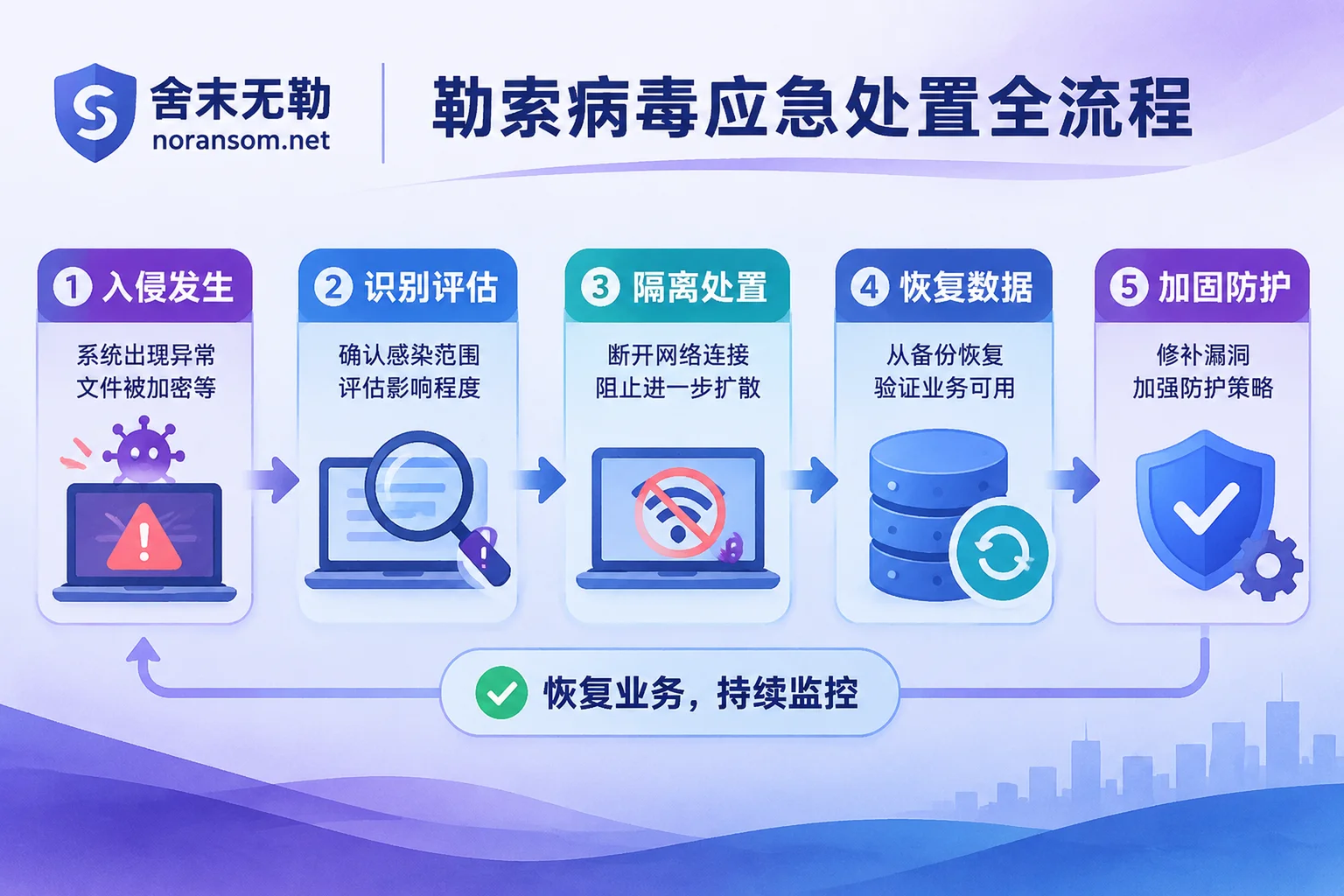
We always adhere to the principle of not paying ransom and not negotiating on behalf of clients. The core strategy is: first identify the family -> then assess the recoverable scope -> finally provide a plan and quote. Through recoverability assessment, you can clearly see the expected results and risks of data recovery, thereby making rational decisions.
3. Scenario-Based Repair, Identify Core Assets
Whether it's database (SQL Server) encryption, virtualization platform (ESXi/Hyper-V) lockdown, or even ERP system account sets (UFIDA, Kingdee, etc.) corruption, targeted underlying technical measures must be taken for different business pain points.
3. Rebuilding Defense Lines: Don't Leave "Backdoors" for Cybercriminals
Cleaning up the virus is by no means as simple as deleting extensions. If security hardening and thorough cleanup of SilverFox Trojan are neglected, the same attackers may return within days.
After business recovery, it is essential to simultaneously reduce external exposure, remediate high-risk vulnerabilities, and rebuild a backup mechanism that cannot be easily deleted. This is the fundamental way to prevent "falling overnight."
Emergency Reminder: If you are in a critical moment of business interruption, please refer to our emergency handling process. While ensuring safety, preserve evidence to maximize the chances of subsequent rescue. Please visit the Noransom official website according to your actual business needs for assistance.



Comments(0)