In 2026, as ransomware attacks become increasingly commonplace, many business leaders face the same nightmare: arriving at the office in the morning to find the server database turned into garbled text, all critical business accounts inaccessible, and a glaring ransom note on the desktop.
Faced with such an extreme scenario, companies often fall into "panic-driven decisions": either blindly restarting systems, installing various unknown "decryption tools," or rushing to find so-called "middlemen" to pay the ransom. However, these actions often destroy originally recoverable data fragments and may even lead to more severe secondary extortion.
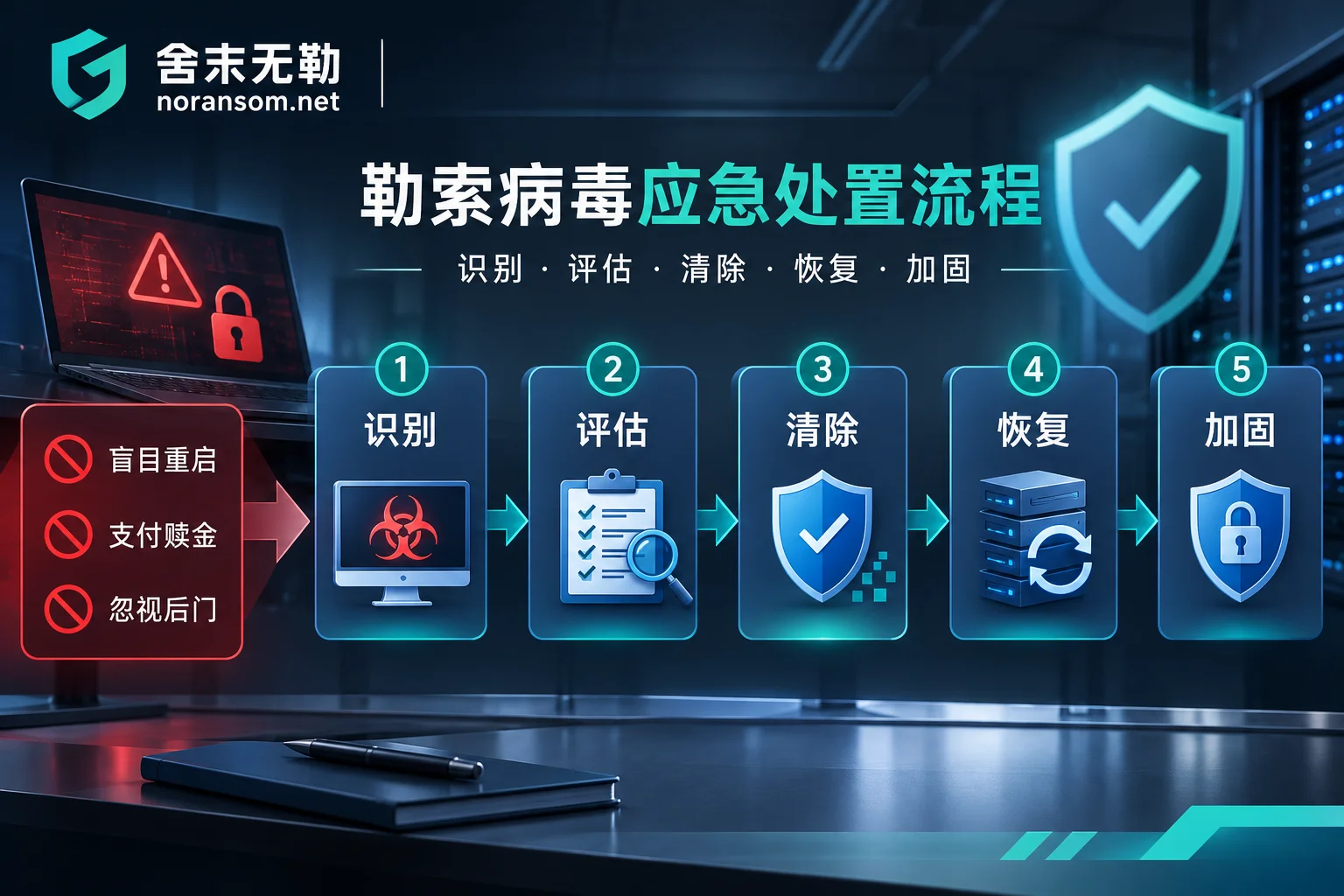
The Cost of Decisions: Why "Panic" Is the Biggest Culprit?
Once data is encrypted by ransomware, time is of the essence. But "time" here does not mean paying a ransom in exchange for an uncertain decryption key; it refers to the precious window to preserve the on-site environment for the best recovery opportunity.
In the emergency practices of Noransom (noransom.net), we have seen too many cases where frequent server restarts and repeated antivirus scans overwrote encryption characteristics, ultimately making originally feasible underlying data repair extremely difficult. Ransomware is not a simple software glitch; it is a confrontation that requires targeted investigation.
Three Golden Rules for Scientific Self-Rescue
1. Rapid Identification, Precise Strategy
Blindly guessing the family not only wastes time but also leads to misjudgments. It is recommended to immediately use the ransomware identification tool to quickly lock down the family version through encryption extensions or ransom notes. Different ransomware families (such as Mallox, Phobos, LockBit, etc.) have completely different encryption mechanisms and weaknesses, and only targeted handling strategies can determine the final recovery outcome. View common families and characteristics summary.
2. "No Payment" Is the Bottom Line and the Starting Point
Paying a ransom not only fails to guarantee 100% data recovery but may also mark the company as a "willing payer," inviting secondary attacks. We always adhere to the principle of not paying ransoms and not negotiating on behalf of victims. The real path should be: identify the family → assess the recoverable scope → execute data recovery and decryption. If the encryption cannot be directly decrypted, professional data recovery services can often retrieve core account data through file-level database repair or fragment extraction.
3. Stop Loss First, Thoroughly Remove "Hidden Dangers"
Many companies only fix the locked data but leave the attacker's "backdoor" behind. Especially with the recent frequent SilverFox/remote control Trojans, even if antivirus software does not detect them, remote control sessions may still remain in the system. Professional security incident response not only recovers data but also thoroughly removes intrusion entry points and persistence mechanisms through traceback and forensics. If these backdoors are not dealt with, the just-recovered business may fall again overnight.
Refuse Blind Actions, Let Professionals Do Professional Work
Whether it is SQL Server database locked, ESXi virtualized environment completely paralyzed, or ERP account sets such as UFIDA or Kingdee abnormal, what companies need is not "luck" but a scientific response process.
When ransomware knocks on the door, remember: do not ruin the future of your data due to momentary panic. Identify first, then assess, then decide. What we provide is not only technical means but also a reassurance for businesses under extreme operational interruption.


Comments(0)